
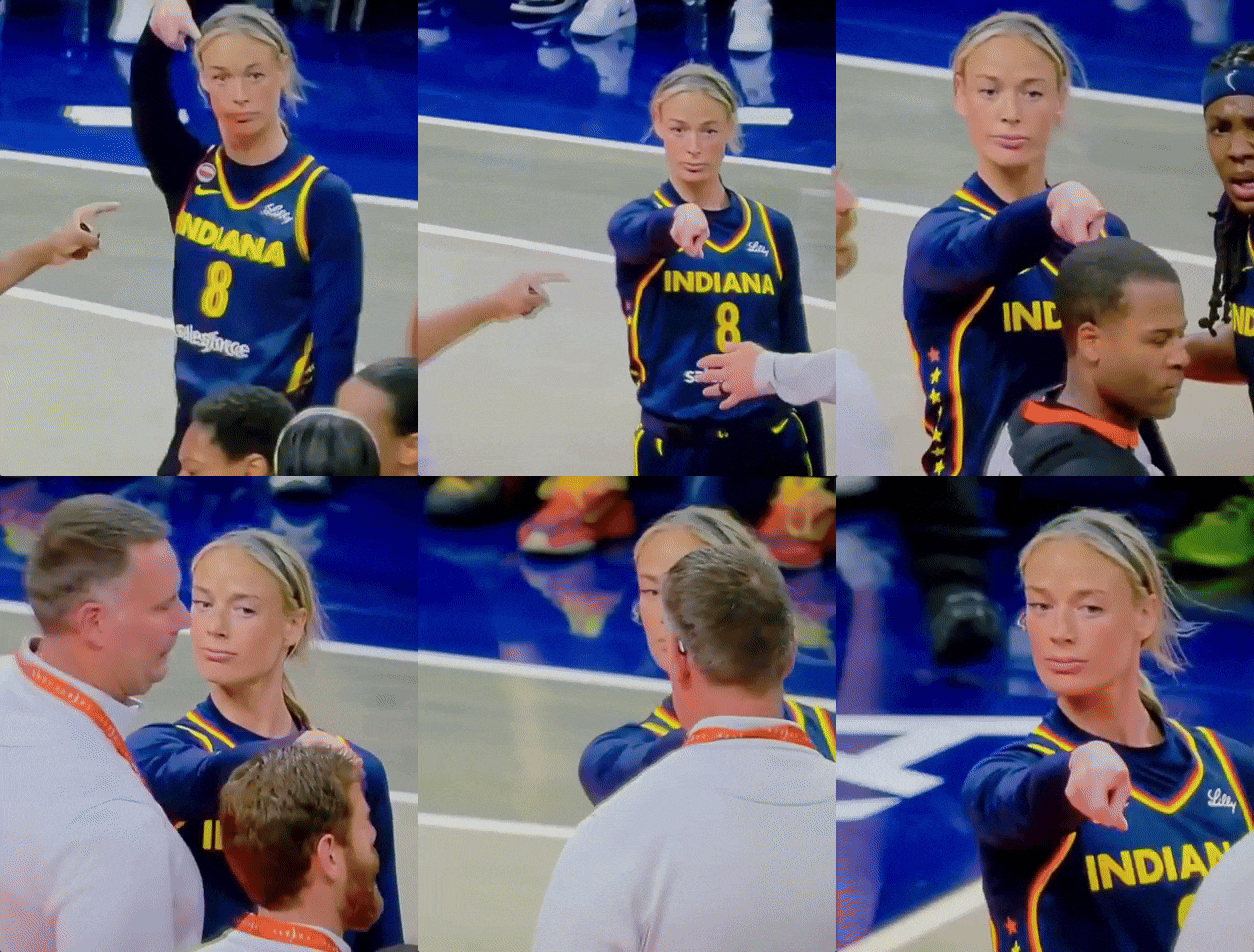
Sophie Cunningham stands on the court in an Indiana Fever jersey, facing forward with one arm raised and her finger pointed toward someone off-screen. Her expression is fixed, serious, and direct. The gesture is simple, but the read is immediate: someone is being called out.
The GIF comes from a heated WNBA moment involving Cunningham and DeWanna Bonner. Outside the basketball context, it works because the action is so clean. No speech is needed. No setup is needed. It is just a hard point, a locked stare, and the feeling of “that one, right there.”
How It’s Used
When blame needs to be assigned
When you know who caused the problem
When someone asks who did it
When the culprit is standing right there
When accusation needs a visual aid
Origin
Person: Sophie Cunningham
Team: Indiana Fever
League: WNBA
Game: Indiana Fever vs. Phoenix Mercury
Date: June 22, 2026
Opponent Player: DeWanna Bonner
The GIF comes from a tense on-court confrontation during the Indiana Fever’s 86-77 win over the Phoenix Mercury. The exchange followed a foul involving Caitlin Clark and DeWanna Bonner, after which several players became involved. Cunningham and Bonner were among the players assessed technical fouls.
The clip became useful outside the game because the image of Cunningham pointing is easy to read without knowing the full sequence. It quickly turns into a general-purpose visual for blame, accusation, or calling someone out.
Why It Became a Meme
The GIF works because the gesture is clear. Cunningham points, holds her stare, and creates an instantly readable accusation. It does not need captions or background to make sense.
It captures the universal feeling of:
“That one. Right there.”
That makes it useful for arguments, group chats, workplace drama, sports debates, and any moment where the simplest answer is pointing directly at the problem.
Legacy
Sports GIFs often spread when a complicated live moment becomes one clean expression. This one does that. The original context is a WNBA confrontation, but the reaction meaning is broader: blame, callout, accusation, and instant identification.