

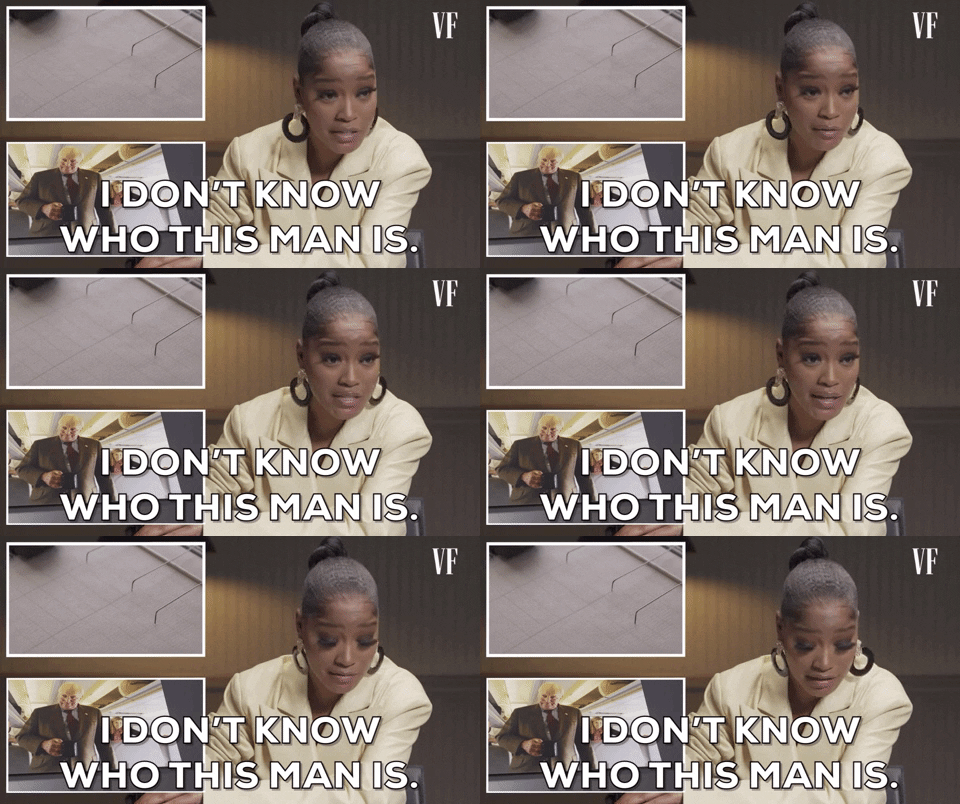
Keke Palmer glances down, then up, offering a small, polite smile that says everything and nothing at once. Her expression lands perfectly between indifference and sympathy—a masterpiece of detached honesty.
The clip comes from her Vanity Fair interview, where she was shown a photo of Dick Cheney and confessed, with iconic sincerity:
“I hate to say it… I hope I don’t sound ridiculous… I don’t know who this man is. I mean, he could be walking down the street—I wouldn’t know a thing. Sorry to this man.”
The phrase and the look became a cultural shorthand for blissful ignorance and calm detachment.
How It’s Used
- When you truly don’t know (or don’t care) who someone is
- When pretending to care about drama you’re actually detached from
- When faced with irrelevant news, gossip, or discourse
- “Me scrolling past celebrity scandals I can’t keep up with”
- Any time ignorance feels like peace
Origin
- Interview: Vanity Fair
- Date: September 2019
- Context: Keke Palmer’s lie detector segment became instantly meme-worthy after her deadpan response to being shown Dick Cheney’s photo.
- The combination of humor, politeness, and total sincerity made the phrase—and the accompanying expression—instantly iconic.
Why It Became a Meme
Its magic lies in emotional ambiguity: she’s not rude, she’s not clueless, she’s just unbothered. That balance made it endlessly adaptable, working equally well for shade, denial, or peaceful detachment. It became one of the defining reaction GIFs of the late 2010s and remains a reference point for online tone mastery.
Legacy (2025)
Six years later, “Sorry to this man” is still a top-tier reaction. It resurfaces every few months during social-media firestorms, often used to diffuse drama or signal selective disengagement. Its longevity comes from precision—it communicates disinterest without hostility.
In the GIF canon, it sits alongside Viola Davis’s purse grab and Mariah Carey’s “I don’t know her”, a permanent fixture in the unbothered icons tier of internet culture.